
Sigma Power Tech Blast Windows

Blast Windows

Blast windows are specially engineered glazing systems designed to protect buildings and occupants from the impact of explosions and blast pressure waves. In high-risk environments where explosions may occur due to industrial accidents, security threats, or hazardous processes, conventional windows can shatter and become a major source of injury and structural damage. Blast-resistant windows are developed to address this risk by providing a stronger and safer alternative to traditional glazing systems.

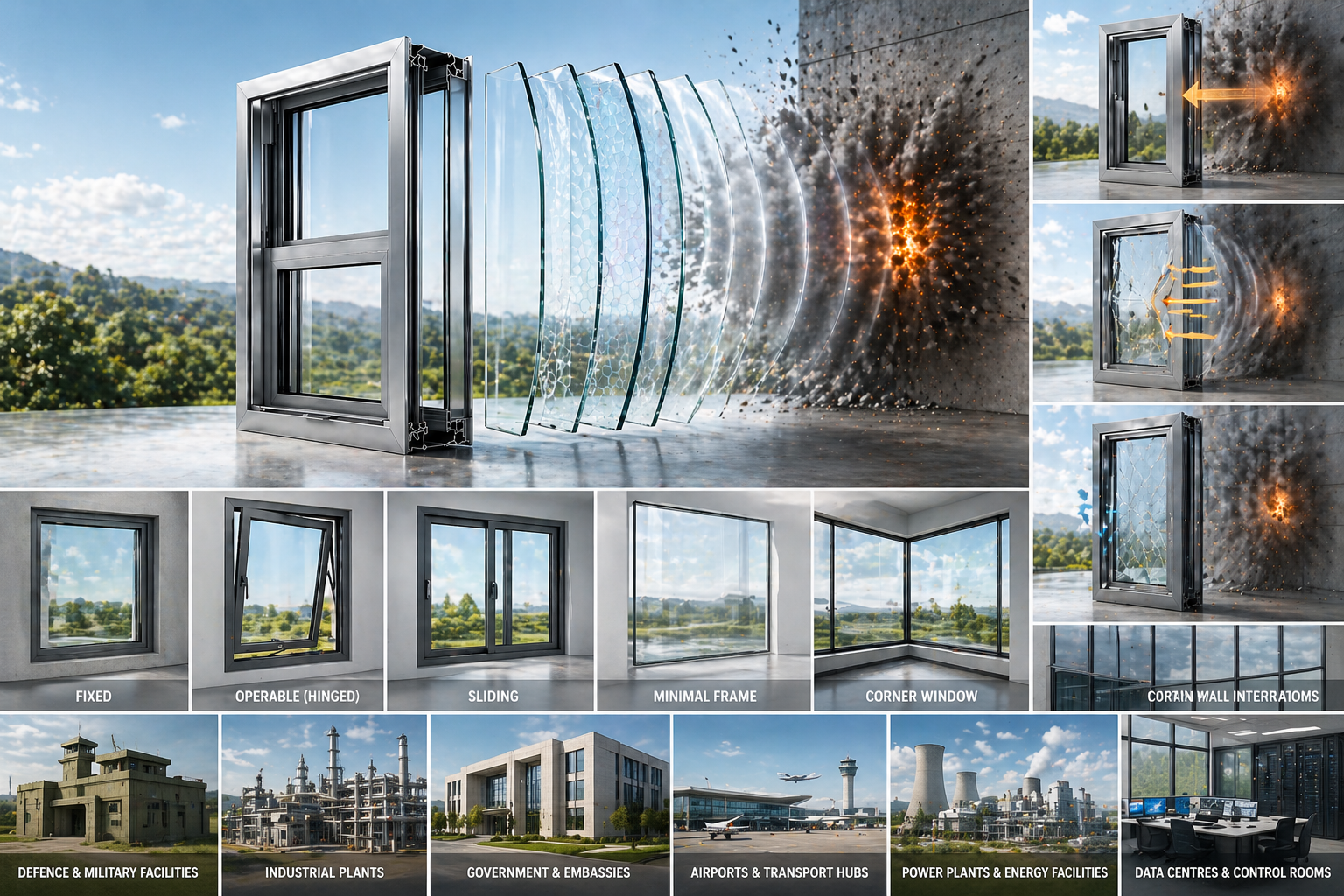
These windows combine reinforced frames with laminated safety glass to absorb and resist the pressure generated during an explosion. Instead of shattering into dangerous fragments, blast windows are designed to maintain their integrity and minimize the risk of flying debris. As a result, they play a crucial role in improving the safety of critical facilities and protecting occupants from blast-related hazards.

Blast windows are commonly used in defense facilities, industrial plants, government buildings, and high-security infrastructure where blast protection is an important design requirement.


What is a Blast Window?

A blast window is a reinforced window system designed to withstand the pressure generated by explosive shock waves. Unlike standard windows, blast windows use specially laminated glass panels combined with heavy-duty frames and anchoring systems to ensure structural stability during blast events.

The laminated glass used in blast windows typically consists of multiple layers of glass bonded together with strong interlayers. This design allows the glass to absorb blast energy while preventing dangerous glass fragments from breaking away. The reinforced frame holds the glass securely in place and transfers the blast loads to the surrounding building structure.

Blast windows are engineered according to specific blast pressure ratings, ensuring they can perform reliably under defined explosion conditions. These systems allow facilities to maintain visibility and natural lighting while providing enhanced safety and protection.

Purpose of Blast Windows

The primary purpose of blast windows is to protect occupants and infrastructure from the harmful effects of explosion pressure and flying debris. When an explosion occurs near a building, the shock wave can cause standard windows to break instantly, creating dangerous glass fragments that may injure people and damage equipment.

Blast windows reduce this risk by resisting the impact of blast pressure and holding the glass fragments together even if the outer layers crack. This significantly lowers the risk of injuries caused by shattered glass.

In addition to safety, blast windows help maintain the structural integrity of building facades. They allow natural light and visibility while ensuring that buildings remain protected against blast threats.

Where Blast Windows are Used

Blast windows are widely used in facilities where safety and blast protection are critical.

Defense and Military Facilities

Military installations, command centers, and defense infrastructure often require blast-resistant windows to protect personnel and sensitive equipment.

Critical Infrastructure

Nuclear power plants, energy facilities, and control rooms use blast windows to ensure operational safety and reduce blast-related risks.

Government and Public Buildings

Embassies, airports, and government facilities often install blast windows as part of their security and safety infrastructure.

Industrial Facilities

Chemical plants, oil refineries, and hazardous processing facilities may incorporate blast windows to reduce the impact of accidental explosions.

How Blast Windows Work

Blast windows are designed to absorb and distribute the energy generated by an explosion. When a blast wave reaches the building, the laminated glass layers flex and absorb part of the energy rather than shattering instantly.

The reinforced window frame and anchoring system distribute the remaining pressure across the building structure. This controlled energy absorption reduces the likelihood of window failure and prevents glass fragments from becoming dangerous projectiles.

Because of this engineered design, blast windows significantly reduce the risk of injury and damage during blast events while maintaining the functionality of the building envelope.

Benefits of Installing Blast Windows

Blast windows provide several important benefits for facilities requiring high levels of safety and protection:

  • Protect occupants from flying glass fragments
  • Resist blast pressure and shock waves
  • Maintain visibility and natural lighting in secure facilities
  • Improve safety in critical infrastructure and industrial sites
  • Reduce structural damage caused by explosions
  • Enhance overall building security and resilience

Blast Window Solutions by Sigma Power Tech

Sigma Power Tech Pvt Ltd provides advanced blast window solutions designed for defense facilities, industrial plants, and critical infrastructure projects. Our blast-resistant glazing systems are engineered to meet demanding safety requirements while ensuring durability and reliable performance.

We offer comprehensive services including engineering consultation, product supply, custom design, installation, and commissioning. Our solutions are suitable for shelters, control rooms, secure buildings, and industrial facilities where blast protection is essential.

With strong expertise in blast protection and CBRN infrastructure systems, Sigma Power Tech delivers reliable solutions that help enhance safety, security, and operational resilience for critical facilities.

Related Posts

Blast Door

Article Header By Sigma Power Tech Apr 2026 Blast Door Blast doors are specialized protective barriers designed to safeguard people, equipment, and infrastructure from the destructive effects of explosions. In facilities where safety and structural integrity are essential, blast doors serve as a critical component of the overall protection system. These doors are engineered to withstand high blast pressures and shock waves, preventing damage to protected areas and maintaining the safety of occupants. Blast-resistant doors are commonly used in environments where explosions, industrial accidents, or security threats may occur. By combining robust construction, reinforced locking systems, and advanced engineering design, blast doors provide reliable protection for facilities that require high levels of security and resilience. What is a Blast Door? A blast door is a heavy-duty door specifically designed to resist the pressure and impact generated by an explosion. Unlike standard doors, blast doors are constructed using reinforced steel structures and specialized frames that can absorb and distribute the force generated by blast waves. The main purpose of a blast door is to prevent explosive pressure from entering protected spaces. When a blast occurs outside a facility, the pressure wave travels rapidly through openings such as entrances, corridors, and ventilation areas. Blast doors act as a barrier that blocks or reduces this pressure, protecting both the structure and the people inside. Many blast doors are also designed with gas-tight sealing systems to maintain controlled environments in facilities such as CBRN shelters or hazardous industrial plants. Purpose of Blast Doors The primary purpose of blast doors is to protect critical facilities and their occupants during explosion events. Explosions create intense pressure waves that can cause severe structural damage if not properly controlled. Blast doors help reduce the impact of these pressure waves by absorbing and resisting the blast forces. In addition to blast protection, these

Read More »

Blast Sleeve

Article Header By Sigma Power Tech Apr 2026 Blast Sleeve Blast sleeves are critical components used in blast-resistant infrastructure to protect ventilation ducts and structural wall penetrations from explosive pressure waves. In facilities designed to withstand blast events, every structural opening must be carefully engineered to prevent failure during an explosion. Blast sleeves play an important role in reinforcing these openings and ensuring that ventilation systems can safely pass through blast-resistant walls without compromising structural integrity. These components are widely used in high-security facilities such as defense shelters, underground bunkers, chemical plants, and other critical infrastructure where blast protection is essential. By strengthening the areas where ducts pass through protective walls, blast sleeves help maintain the safety and reliability of the entire protection system. Modern blast protection systems often integrate blast sleeves with ventilation ducts, blast valves, and gas-tight valves to create a complete protective solution for facilities exposed to potential explosion risks. What are Blast Sleeves? Blast sleeves are reinforced structural sleeves installed around ventilation ducts or openings where they pass through blast-resistant walls or barriers. Their main function is to protect the penetration point in the wall from structural damage during a blast event. In blast-resistant facilities, ventilation ducts are necessary to provide airflow for occupants and equipment. However, these ducts must pass through thick concrete or reinforced walls that are designed to withstand explosive forces. Without proper reinforcement, the area around the duct penetration could become a weak point during an explosion. Blast sleeves solve this problem by providing a strong protective interface between the duct and the surrounding structure. Typically made from heavy-duty steel or reinforced materials, blast sleeves help distribute blast pressure loads across the structural wall, reducing the risk of cracking, deformation, or failure. Purpose of Blast Sleeves The primary purpose of blast sleeves is to maintain the structural

Read More »

Blast Valve

Article Header By Sigma Power Tech Apr 2026 Blast Valve Blast valves are essential safety components used in protected buildings and critical infrastructure to safeguard ventilation systems from explosive shock waves. In facilities where safety and structural integrity are crucial, such as defence shelters, underground bunkers, and high-security installations, blast valves play a vital role in protecting both equipment and human life. These valves are specifically designed to prevent the entry of destructive pressure waves into ventilation systems during an explosion. Modern blast protection systems integrate blast valves with ventilation and filtration equipment to ensure that air supply systems remain functional while maintaining maximum protection during hazardous events. What is a Blast Valve? A blast valve is a specialized mechanical safety device installed within air ducts or ventilation openings to protect a facility from blast pressure. During normal conditions, the valve allows air to flow freely through the ventilation system. However, when an explosion occurs and a shockwave travels through the ductwork, the blast valve automatically closes to block the incoming pressure wave. This rapid closing action prevents the blast wave from entering the protected area and damaging internal systems. Blast valves are typically designed to withstand high levels of overpressure and are capable of operating automatically without requiring any external power source. BENEFITS OF INSTALLING BLAST VALVES Installing blast valves provides several critical advantages for protected facilities: Ventilation Protection Protects ventilation systems from sudden blast pressure, preventing damage and ensuring airflow continuity. Enhanced Safety Improves safety for occupants inside shelters by blocking harmful shockwaves and pressure surges. Structural Protection Prevents structural damage to critical infrastructure by reducing the impact of explosions. Contamination Control Reduces the risk of hazardous contaminants entering the facility through ventilation systems. CBRN System Reliability Enhances the reliability and effectiveness of CBRN filtration systems during emergencies. Regulatory Compliance Helps facilities comply with safety and

Read More »
Scroll to Top