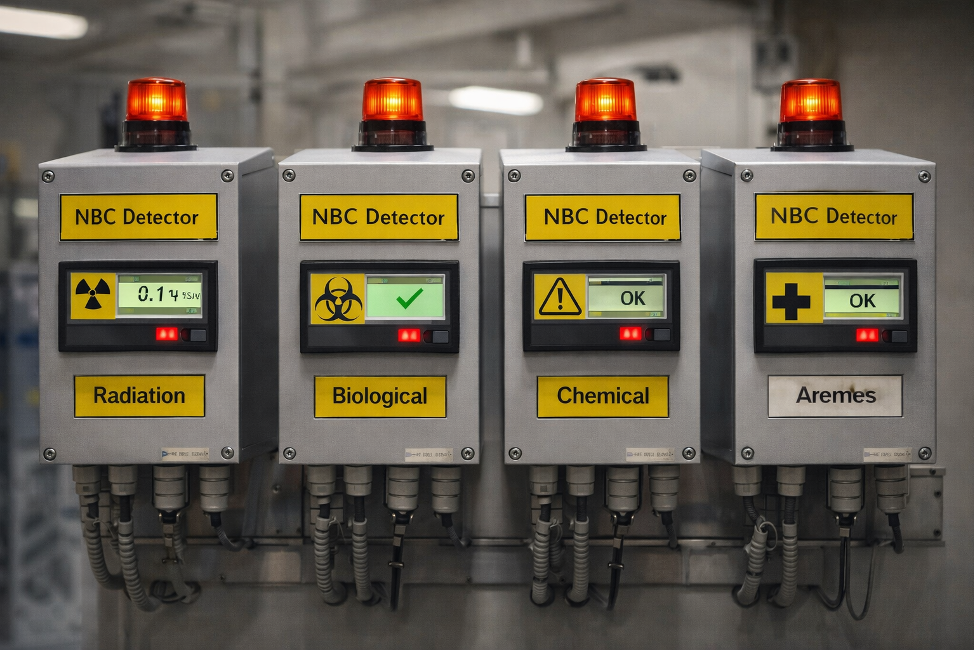
NBC Detectors are specialized monitoring systems designed to detect the presence of nuclear radiation, biological agents, and chemical contaminants in the environment. In facilities where protection against hazardous threats is essential, early detection plays a critical role in ensuring the safety of personnel and infrastructure. NBC detectors provide real-time monitoring of environmental conditions and generate alerts when dangerous substances are detected.
These systems are commonly used in civil defense shelters, military installations, research laboratories, and critical infrastructure facilities where the risk of exposure to nuclear, biological, or chemical agents must be carefully managed. By identifying hazardous conditions at an early stage, NBC detectors allow operators to initiate protective measures such as activating filtration systems, isolating affected areas, or alerting emergency response teams.
Modern NBC protection systems integrate detection devices with ventilation systems, filtration units, and centralized control panels to create a comprehensive safety solution capable of responding quickly to potential threats.
What is an NBC Detector?
An NBC Detector is a specialized detection device designed to monitor the environment for nuclear radiation, biological contaminants, and chemical agents. These detectors use advanced sensing technologies to analyze air, surfaces, or surrounding environmental conditions in real time.
Unlike conventional environmental monitoring devices, NBC detectors are designed to identify highly hazardous substances that may pose immediate risks to human health. The detection system continuously scans the environment and compares sensor readings with predefined safety thresholds. When abnormal conditions are detected, the system generates alarms and sends signals to control systems or operators.
NBC detectors are often integrated with shelter protection systems, building automation systems, and emergency alert networks. This integration ensures that the detection system not only identifies hazards but also helps trigger automated safety responses when necessary.
Purpose of NBC Detectors
The primary purpose of NBC detectors is to provide early warning against nuclear, biological, and chemical threats. In hazardous environments, the ability to detect dangerous substances quickly can significantly reduce the risk of exposure and improve emergency response effectiveness.
NBC detectors allow operators to monitor environmental conditions continuously and respond immediately if hazardous agents are present. This early detection capability enables facilities to activate filtration systems, isolate contaminated zones, and protect occupants from potential exposure.
In NBC shelters and protected facilities, detectors also support the operation of ventilation and filtration systems by providing real-time data about external air conditions. This information helps ensure that only safe and filtered air enters protected areas.
Where NBC Detectors are Used
NBC detectors are used in various facilities where protection against hazardous substances is critical.
Civil Defense Shelters
Public protection shelters and underground bunkers rely on NBC detectors to identify contamination events and activate filtration systems.
Defense and Military Installations
Military bases, command centers, and defense shelters require NBC detection systems to protect personnel during chemical or biological threats.
Critical Infrastructure
Strategic government buildings, nuclear power plants, and transportation hubs use NBC detectors to ensure environmental safety.
Industrial and Research Facilities
Chemical processing plants, laboratories, and pharmaceutical facilities may use NBC detectors to monitor hazardous environments and maintain safety compliance.
How NBC Detectors Work
NBC detectors operate using a combination of advanced sensing technologies designed to detect different types of hazardous agents. Radiation sensors measure levels of ionizing radiation associated with nuclear threats, while chemical sensors analyze air samples for the presence of toxic gases or chemical warfare agents.
Biological detection systems may monitor airborne particles or biological markers that indicate the presence of harmful microorganisms. The detector continuously processes data collected by these sensors and compares it against safe operating limits.
If a hazardous substance is detected, the system immediately generates an alarm signal. This signal may activate warning systems, notify operators, or trigger automated responses such as switching the shelter ventilation system to filtration mode.
By providing continuous monitoring and rapid alert capabilities, NBC detectors play a vital role in protecting both personnel and critical infrastructure.
Benefits of using NBC Detectors
NBC detectors offer several important advantages for facilities requiring high levels of safety and protection:
- Early detection of nuclear, biological, and chemical threats
- Real-time monitoring of environmental conditions
- Rapid warning and emergency response activation
- Integration with shelter ventilation and filtration systems
- Improved safety for personnel and protected facilities
- Reliable monitoring in critical infrastructure environments
NBC Detector Solutions by Sigma Power Tech
Sigma Power Tech Pvt Ltd provides advanced NBC detection solutions designed for shelters, defense infrastructure, and critical industrial facilities. Our NBC detection systems are engineered to integrate seamlessly with ventilation, filtration, and control systems used in NBC protection environments.
We offer complete services including system design consultation, equipment supply, installation, integration with control panels, and commissioning. Our solutions are suitable for civil defense shelters, underground protection systems, military installations, and hazardous industrial environments.
With strong expertise in CBRN protection and shelter infrastructure systems, Sigma Power Tech delivers reliable NBC detection solutions that enhance safety, monitoring capability, and emergency preparedness for critical facilities.